DAM OR BE DAMNED!!!

November 3, 2022

Mr Katter outlines how water and irrigation can create prosperity in inland Australia. Photos taken by Scott Radford Chisholm
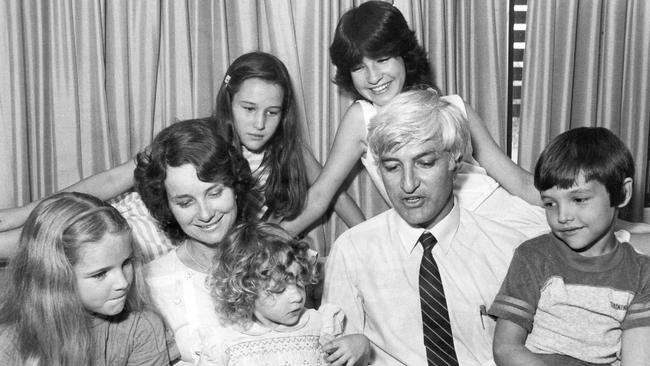
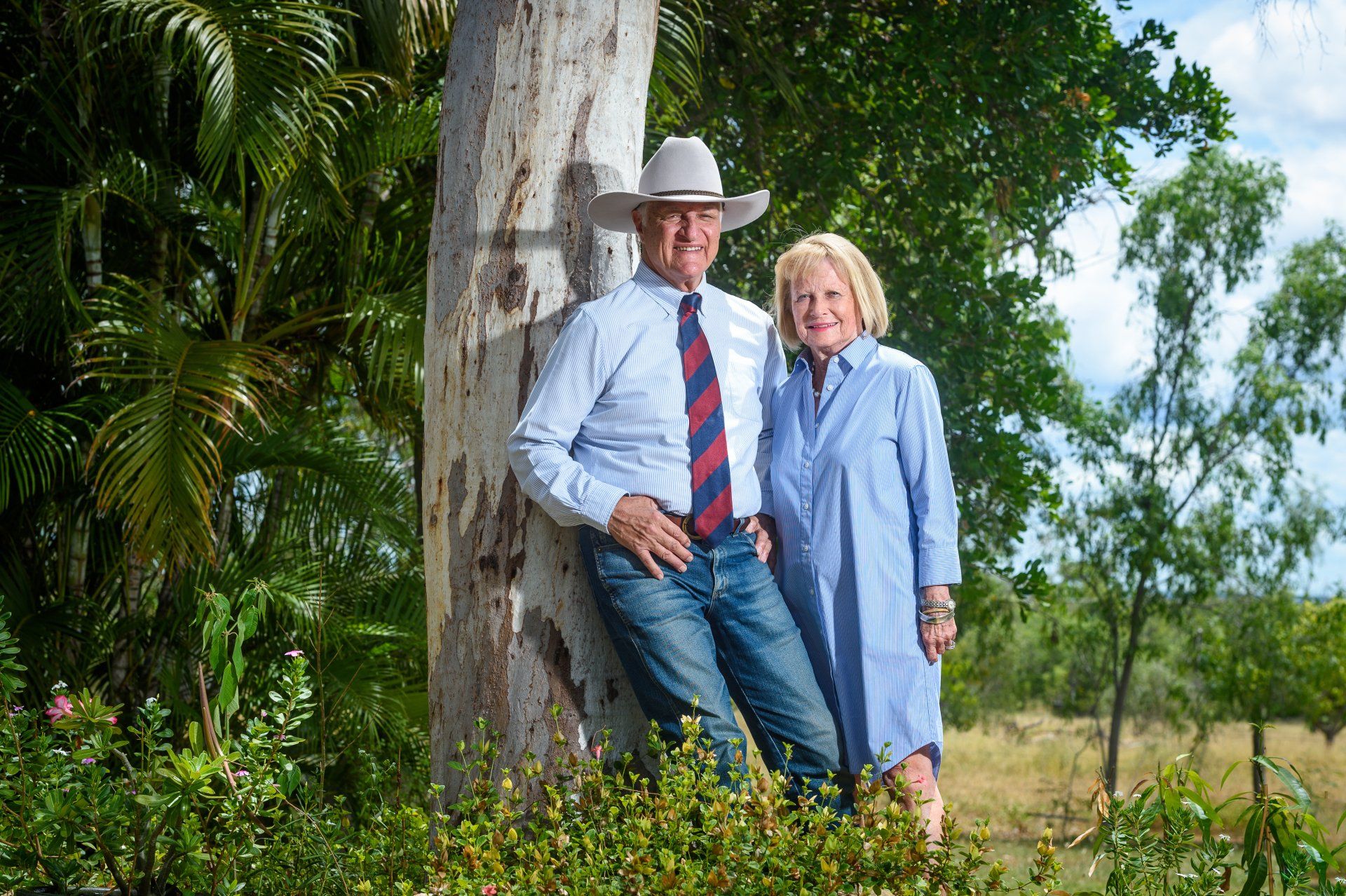
  • Bob and Susie raised their five children proudly in their family home

    Button
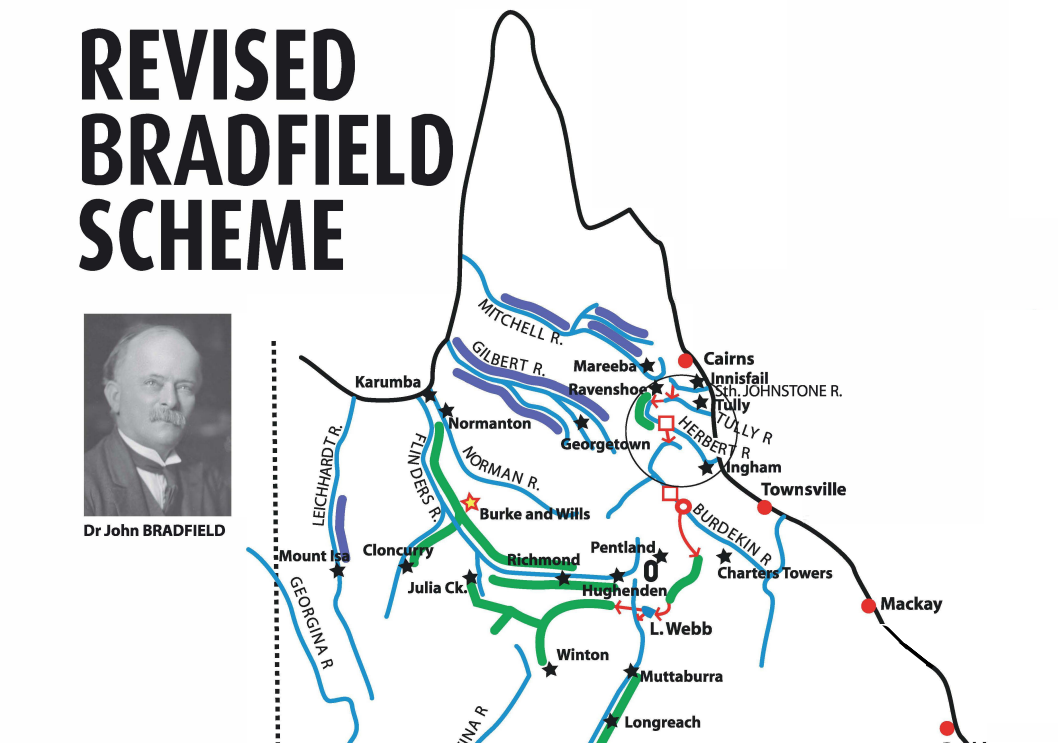
  • The Revised Bradfield Scheme Map

    Button
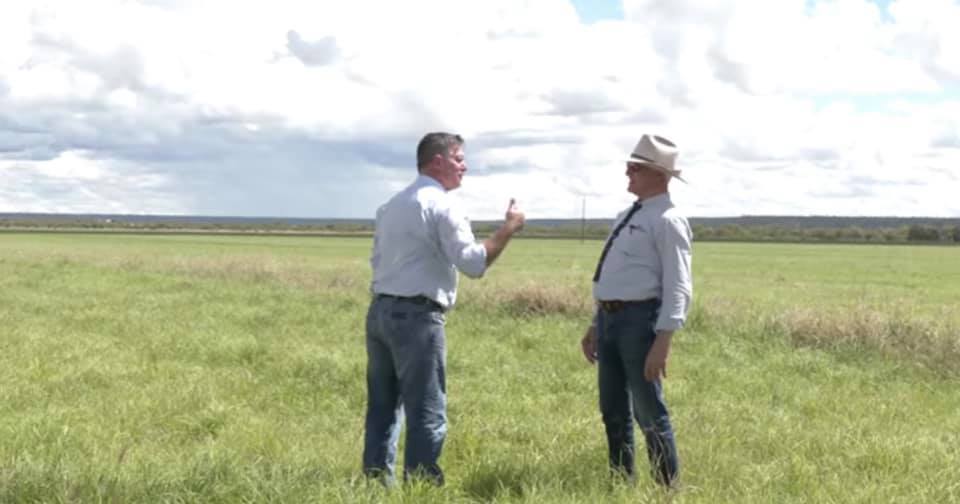
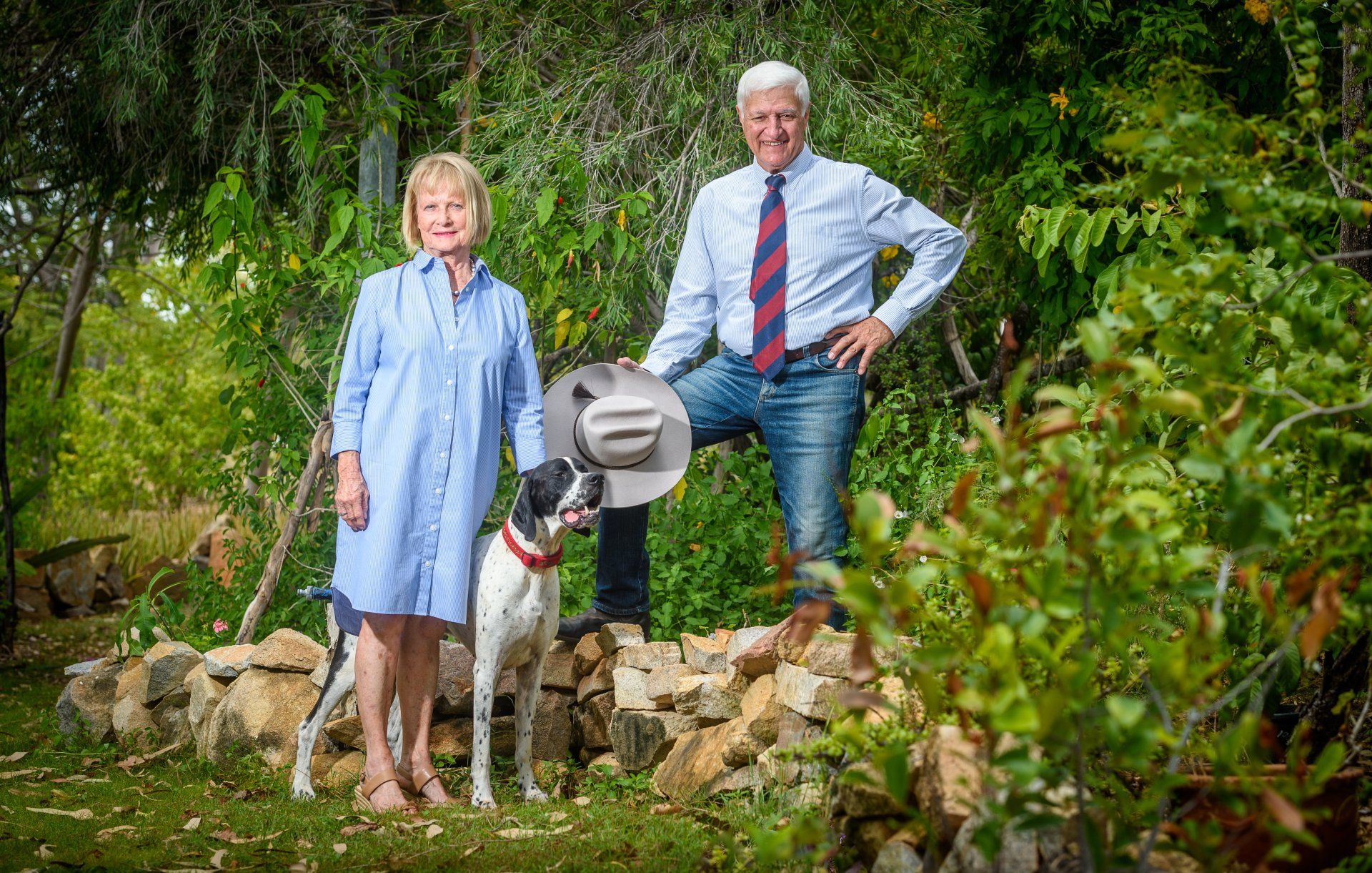
  • Bob stand with HIPCo on the irrigation area in Hughenden

    Button
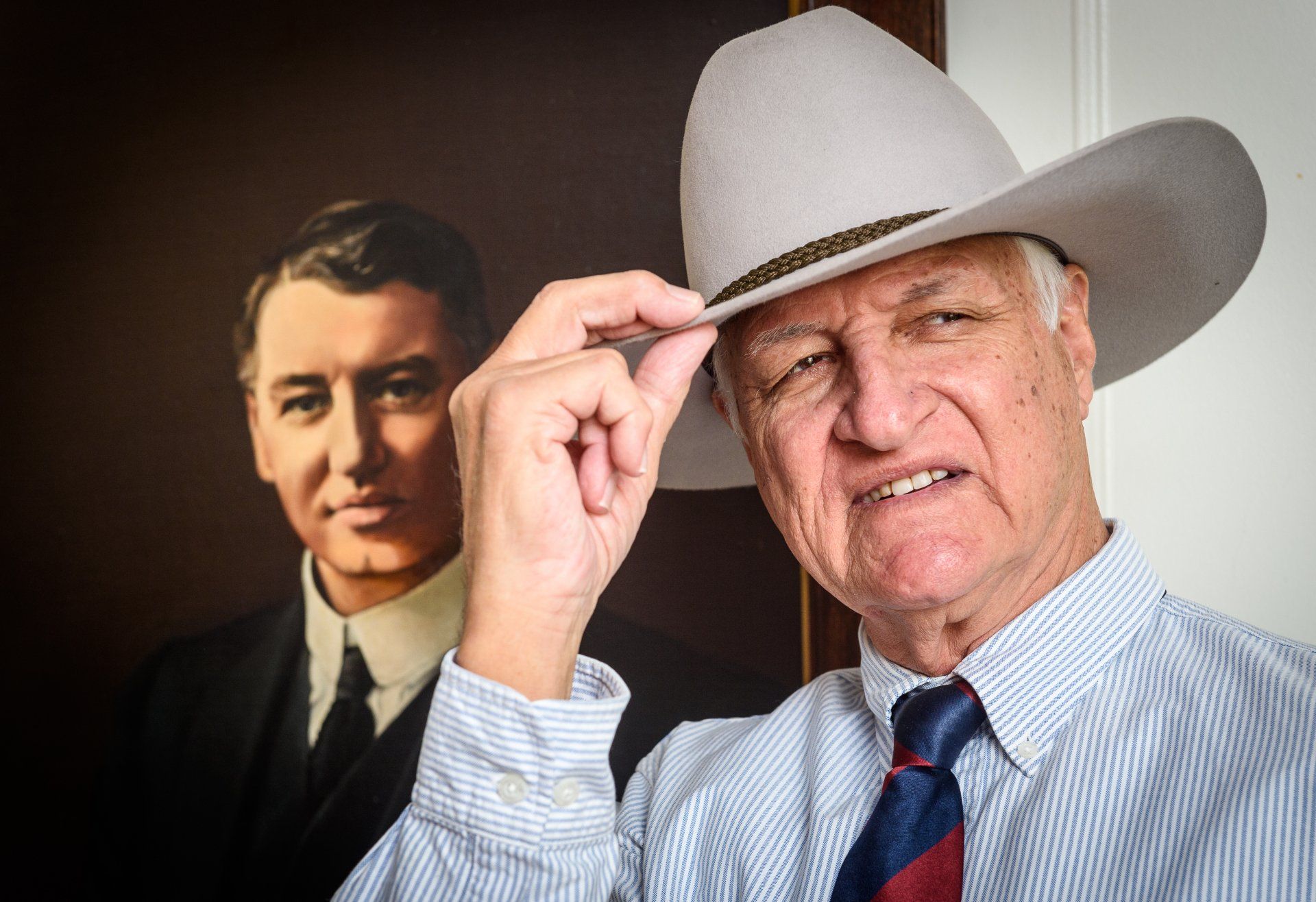
  • Bob's heroes sit on the walls of his house and Parliament offices

    Button

In my Parliamentary office, I sit under a photo of Black Jack McEwen and Red Ted Theodore. McEwen said the most important thing in Govt. is getting it right. Theodore epitomised getting it right. John Anderson is a likeable bloke, written many good yarns but his “Spotlight on Dams” TB. 16 July 22 exemplifies the same lamentable journalism manifest in his “synapses snap” when writing a glowing tribute to a Qld. police officer who was in charge of cattle thieving. If that sentence has a double meaning, that is, what is intended.

Six heartbroken familys – their loved ones – murdered or murder suicides.  I don’t know Ewen Jones. He presided at a Cowboys dinner letting us know that he and old ‘so and so’ were “old school tie” buddys from a ‘Rah Rah’ (R. Union) school.

We commoners were gently reminded that we’d gone to R. League Schools.  At my school, Mt Carmel, ‘History’ and ‘Logic’ were compulsory.

Now, these comments are not “ad hominem” they are at the heartland of this debate.  Because the real question here is who do you follow? “John Crew Bradfield” and “Leo Hielscher”? Or do you follow Mr Anderson and the exponents Mr Anderson has put before us?

Dr J.C. Bradfield built the Sydney Harbour Bridge, Story Bridge in Bris, Sydney’s water supply, the Univ. of Qld, Sydney’s Underground Rail System (the latter winning, that year, the “World Prize for Engineering”).   


Sir Leo Hielscher who with Bjelke-Petersen gave Qld its Economic miracle: - Coal, Aluminium, Nickel, Tourism. Leo at 95 is still working to see “Bradfield” happen. I was with he and his engineer last month.   Qld. Premier Peter Beattie, PM Malcolm Fraser, Dep. PM Doug Anthony, PM Kevin Rudd all are on record backing Bradfield.   You can follow them or you can follow Mr Jones, Messer’s Lindsay and Lindsay and Townsville Enterprise. To be fair, Mr Jones in his proposal for weirs on the Upper Burdekin and the Flinders Rivers is ‘spot on’. With the two weeks in which I had the balance of power, I secured $28m for what will be the first of two weirs above Charters Towers and $185m for Thread Irrigation, Ballot Farms at Hughenden. This was 4 ½ years ago. Why no action?

Because Fed Govts. have spinelessly bowed to the anti development Qld Govt.


As a published historian I am entitled to observe that the current Qld Govt is easily the worst in Qld history thanks to its euthanasia, abortion and scorn for motherhood; we Qld’ers are now a ‘vanishing race’.
They’ve quadrupled the price of electricity and sold Qld Rail, eliminating the jobs - sacking 14,000 railwaymen, 2,300 electricity workers (following reregulation), and more recently 6,000 taxi drivers. They've committed us to a ‘Nero like’ Olympic games which cost China $29,000m (Qld’s annual budget is only $54,000m).  $7,000m on a Taj Mahal for themselves and Pleasure Domes along the Bris. River and 33km of tunnels. NQld’s got none.
Qld’s Govt gave all of the Flinders River Water allocations to two corporates, Stanbroke and AACo (foreign owned). The locals, we Nth Qld’ers, effectively got nothing. The Great Theodore Labor and B-Peterson Country Party Govts took the land off the rich and the corporates (built the sinews of industry) and “gave it to the people”. This Qld Govt does the opposite.

The Qld Govt. claims it pioneers exports. It does. It exports jobs in coal mining and power stations to solar factorys in China.  HIPCo - Hughenden's ballot irrig farm proposal extended to C-curry, Julia Ck, Richmond will put 100,000 residents into the Midwest, where only 9,000 people now live.
Before 'balloted farm' irrigation at Emerald, Griffith (NSW) and Mareeba each had a pop. under 1,000 people. With “owner occupier” “balloted” irrigation farms each town grew to a pop of over 20,000.

Mr Jones quite rightly criticises the ‘extraordinary’ proposal to “Raise B-kin Falls Dam” to create pump hydro electricity. It is the same proposal T’ville Enterprise put forward for their ‘shrunken’, ‘miniaturised’ Hells Gates proposal, costed at a prohibitive $5,400m.  Much worse still, the Raised B-kin Falls project takes water from the dry inland – in the driest continent on earth – in order to create electricity in the most ‘coal rich’ and ‘solar rich’ state on earth.
Raising B-kin Falls – unconscionably – wastes yet another half million megalitres to evaporation. It starves Bradfield (Hells Gates) and Urannah of water. Destroying both projects for forever.

We’ve golden soil and wealth for toil” No we haven’t! Ms Qld Govt took it from us. An abortion of a govt, rotten with “gang” “green”.

Now let me be very specific. The Bjelke Peterson Govt. (under Leo Hielscher) and the Fraser Anthony Fed Govt. announced the building of Bradfield in 1982, commissioning the leading dam builders in Aust. history to produce the “Bradfield Consortium Report 1984”.
Bradfield Stage I was the Hells Gates Dam and the Grand Canal to irrigation at the “Uplands Desert” S.W. of Ch. Twrs and thence onto Hughenden’s midwest plains. It was costed (in now money) at $1,410m. Recent add-ons would cost it closer to $3,000m.
Production from Bradfield Stage I is delineated in the “Hells Gates Upper Burdekin Irrigation Scheme” (UBurIS) (McFarlane Consulting 2018). This heavily footnoted document quantifies the project’s annual prod. Figures:
  • Ethanol (clean petrol & a feedstock for plastics) - $870m
  • Sugar – $502m
  • Electricity – $240m
  • Biodiesel – $10m,
  • Beef Production (from sorghum & pondfeed algae) - $1,380m
  • Eucalyptus – as dressed timber - $1,200m.
          (as it is an algae project there’s ‘net zero emissions’)
It will earn for Australia from from just UBurIS (Hells Gates) –

Bradfield Stage I $4,200m every year forever.

Hells Gates built to a crest height of 400 metres (above sea level) facilitates the syphoning – not pumping – of water to T’ville.

  • T’ville will now get the cheapest and most adequate water supply of any Australian city.
  • Ingham, with the diversion of the Upper Herbert, will be protected from the “catastrophic double flood”.
  • The Hughenden, Cloncurry, Winton, Longreach Circle’ taking the Bradfield water coming through this Break in the Great Divide will supplement the great but erratic waters of Australia’s 6th largest river - the Flinders. And will deliver over $12,000m every year for forever.
  • It regenerates my homeland the Midwest – the “Plains of Promise”. They sadly are now the “Plains of Perish and Pain”. They’ve been degraded by nature;- “the dry” bares the ground and then “the wet” erodes it away. With the ever-growing 12m hectares of prickly acacia infestation and the 3m wild pigs – we now have advanced land degradation with widespread and spreading erosion.


Ballot Farms and Thread Irrigation arrests and reverses this downcycle. It will also provide a reward for those heroic Australians.
“Keeping the flame on a windswept plain”.
“That will keep them broke ‘til they go insane”.
 My wife’s (and my) 10 acres in Ch. Towers 50 years ago hadn’t a single tree on it, it had two eroding gullys, scattered tufts of wire grass and over 400 chinee bushes and rubber vines.  It now has thick knee high euracloa and buffel, the gullys are rocked. It runs 2 horses and 3 kangaroo who visit. It has over 1,000 native trees and 22 bird species, lawns and gardens.

This is what we can deliver to Inland Nth Qld. The protection of our creeks and rivers, their banks now lined by irrigated pasture. A restoration of nature – the Flinders and Mitchell grasslands.  And most important of all, the creation of a wonderland of freedom, opportunity and excitement for our grandkids and their great grandkids.
By Kahla Kruger July 1, 2026
KAP Federal Member for Kennedy Bob Katter has welcomed the completion of the sale of Phosphate Hill, celebrating it as a major win for North West Queensland workers, industry and the future of Australian fertiliser production. Mr Katter said the announcement represented the culmination of years of relentless campaigning to keep one of Australia's most strategically important industrial assets operating. "This is wonderful news for North West Queensland," Mr Katter said. "For years we've been bashing the doors down, that if Australia wanted to keep industry alive, governments had to step in and secure a future for assets like Phosphate Hill." Mr Katter said the federal government’s Reserve Resource Policy had been instrumental in helping create the conditions for the sale. "Getting a Reserve Resource Policy in place has been one of the major achievements of my political life. We fought tooth and nail because Australia should never be paying world-leading prices for our own gas. "Our competitors in countries like the United States and Russia have access to affordable energy, while Australian manufacturers have been paying more than $16 a unit for gas.” Mr Katter said affordable gas was fundamental to the survival of the North West's industrial base. "Everything at Phosphate Hill depends on gas. It powers the plant and drives the chemical processes that turn our natural resources into the fertiliser. "Only a year or so ago we were staring down the barrel of losing one of Australia's biggest industrial centres, with the closure of copper and phosphate production threatening thousands of livelihoods across the North West. "This is an enormous relief for the workers, contractors, families and communities who never gave up. "I particularly want to thank the people of North West Queensland who stood together and fought for this outcome. They refused to accept that these jobs should disappear, and today their determination has been rewarded." Mr Katter said the focus must now be on ensuring Phosphate Hill has the affordable energy certainty needed to remain strong operation for decades to come.  -ENDS-
By Kahla Kruger June 25, 2026
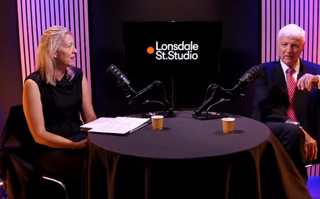
Parliament is back and so is the fight for Australia's future. This week, Bob and Elise sit down in Canberra to tackle one of the country's most contentious issues: immigration. Was the Bondi tragedy a warning sign? Bob argues it exposed much deeper problems, and that Australia's political class has abandoned its duty to protect the nation. Plus, inside Bob's $300 billion plan to transform Australia from a country that spends money into one that makes it. Listen now!
By Kahla Kruger June 21, 2026
This week on Wisdom Mongrel Patriot, Bob hits the road and takes listeners deep into the heart of the Kennedy electorate to showcase the people, places and businesses that make Northern Australia tick. Our first stop is the tropical paradise of Mission Beach, where Bob sits down with one of the region's young entrepreneurs, Liam Johnson, owner of Scotties Bar and Grill. Liam shares the reality of starting a small business in today's Australia. Despite the challenges, he's chosen to back himself and invest in his community. Why would a young bloke take the risk? What keeps him going? And what does the future hold for regional small business? Along the way, Bob and Elise explore the wider Mission Beach region; one of Australia's true hidden gems. From pristine beaches and tropical rainforest to tourism, agriculture and local enterprise, they discuss why this corner of North Queensland continues to attract people looking for opportunity and a better way of life. And because no road trip with Bob would be complete without it, listeners are treated to another classic Bob serenade that proves once again that politics and music are never far apart in Kennedy. This week is a story about backing yourself, building something from scratch and having a crack when plenty of others wouldn't.  Pull up a stool, grab a cold one and join Bob as he takes Wisdom Mongrel Patriot on the road. 🎙️🍻🌴
By Kahla Kruger June 4, 2026
This week, Bob sits down with AgForce Queensland President Shane McCarthy, better known to mates and colleagues simply as "Sheep". In a frank discussion about the future of Australian agriculture, Sheep outlines the biggest challenges facing farmers today. He discusses the need for cutting through layers of red and green tape to ensure that producers can get on with the job of feeding the nation. The pair discuss the growing burden of regulation, the need for practical policy solutions, and why governments must start trusting farmers instead of tying them up in bureaucracy. They also tackle the escalating pest crisis affecting rural Australia, including the impact of pigs, wild dogs, wild cats and other feral animals and invasive species that continue to devastate livestock, crops and native ecosystems across the country. Along the way, Bob and Sheep share a few laughs, including a brief detour into the mystery of Bob's famously crooked nose, before reflecting on the homeland and values that shaped them both. It's a conversation about agriculture, common sense and the people who keep Australia fed. Listen now for a paddock-to-parliament discussion on farming, freedom and the future of regional Australia.
By Kahla Kruger May 28, 2026
28 May 2026: On World Blood Cancer Day today, Kennedy MP Bob Katter has welcomed the Federal Government’s announcement of strengthened funding for a major recruitment campaign to register hundreds of thousands more stem cell donors to be potentially called upon help save the lives of fellow Australians. In response to a question from Mr Katter in Parliament yesterday, the Health Minister confirmed Australia continued to hold one of the smallest stem cell donor registries of all developed countries – three years after vowing to expedite a significant increase in lagging donor registrations following representations by Mr Katter. The Minister also confirmed the Government’s call for tenders this week to establish a specialist stem cell donor registry and clinical service, to facilitate greater donor-recipient matches as the last hope for survivors. Mr Katter said the Life Saving List community campaigners had increased bone marrow donor registrants from 168,000 to 190,000 in the three years since the Health Minister noted Australia had not moved fast enough to help more blood cancer patients find donors. “In these three years, Australia has lost 18,000 lives – 20 people a day – including my nephew Liam,” he told Parliament before today joining community-based campaigners with the Parliamentary Group on Bone Marrow Donation to mark World Cancer Day in the Speaker’s Courtyard, where special guests from the Canberra Raiders demonstrated the quick and simple test to go on the register with just a cheek swab, or when donating blood. Along with Australian Red Cross Lifeblood and Stem Cell Donors Australia, Life Saving List campaigner Josephine O’Brien said she was grateful for the progress in the two years since the premature death of husband Liam, who remained steadfast in his commitment to growing the stem cell donor registry whilst fighting for his own life. Acknowledging the work of Lifeblood for the treatments Liam required daily thanks to the kindness of strangers donating, Mrs O’Brien said: “No family should have to carry the weight of finding a donor alone. When someone you love needs a stem cell match, you are already facing the hardest moment of your life.” She also paid tribute to the Canberra Raiders for their ongoing support with the “relentless efforts” of campaigners and Parliamentary Group on Bone Marrow Donation – including Mr Katter, Macarthur MP Dr Mike Freelander, Kooyong MP Dr Monique Ryan, Forde MP Mr Ted O’Brien, Lyons MP Hon. Rebecca White and their staff – who fought for the inclusion in 2023 of cheek-swab registrations as “a giant leap forward for Australia that would not have been achieved for many years without the force of Liam O’Brien behind it”. Mr Katter said the additional expansion of 17-year-olds to the list of eligible donors would increase the pool of potential registrants from which to recruit potential stem cell donors by several hundred thousand young Australians; and welcomed the Minister’s further advice that the successful tenderer to provide clinical services to match donors with patients, would be asked to consider whether the age limit be raised from 35-40 years.
By Kahla Kruger May 28, 2026
Josephine O'Brien joins Wisdom Mongrel Patriot on World Blood Cancer Day to share the deeply personal story behind the campaign that is transforming Australia's stem cell donor registry. After losing her husband Liam to blood cancer, Josephine has turned unimaginable grief into action, leading the fight to grow Australia's donor register and give other families the chance they never had. Bob Katter, his Chief of Staff Kahla Kruger, and Josephine discuss Australia's chronic shortage of stem cell donors, the progress made through the Life Saving List campaign, the importance of simple cheek-swab registrations, and why thousands more young Australians are needed on the register. This is a story of courage, persistence and hope, and a reminder that a single donor can mean the difference between life and death. Every Australian aged 17-35 can help. One cheek swab could save a life.
By Kahla Kruger May 25, 2026
Australia was once a country where an ordinary Australian could buy a home, raise a family and have the mortgage knocked over by 30. Today, young Australians are being sold a very different dream, a lifetime on the hamster wheel, saddled with million-dollar mortgages they may never escape.
By Kahla Kruger May 13, 2026
In this episode of Wisdom Mongrel Patriot, Bob Katter and Elise deliver a blunt dissection of the 2026 Federal Budget - and ask the question many in the bush are already asking: where exactly does Regional Australia fit into the nation’s future? Where does self-sufficiency fit? Where does the Australia we used to know and love fit?
By Kahla Kruger May 7, 2026
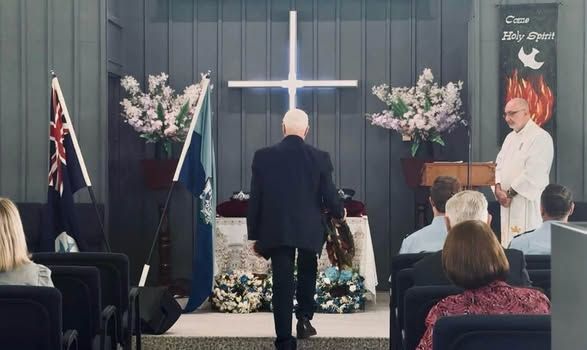
Bob Katter, KENNEDY MP, has attended commemorations for the Battle of the Coral Sea in Cardwell over the weekend, joining veterans, families, community members and local organisations in paying tribute to those who served during one of the most significant naval battles of World War II.P The Battle of the Coral Sea, fought in May 1942, marked a major turning point in the Pacific War and is widely recognised as the battle that helped halt the Japanese advance towards Australia. Mr Katter said commemorative events like the Cardwell service were critically important in ensuring Australians never forgot the sacrifices made by servicemen and women who defended the nation. “These men and women stood up when their country needed them most. Many never came home, and many others carried the scars of war for the rest of their lives,” Mr Katter said. “Events like this are about paying our respects and making sure younger generations understand the price that was paid for the freedoms we enjoy today. “Regional communities have always carried a very strong tradition of service. You see it right across North Queensland and I have spent untold hours in pubs talking to families who have served generation after generation in defence of this country.” Mr Katter also thanked organisers, veterans and volunteers involved in the commemorations for ensuring the legacy of Australia’s servicemen and women continues to be honoured. “As Australians, we have a duty to remember them. Ceremonies like the Battle of the Coral Sea commemorations keep that spirit of remembrance alive.” ENDS
By Kahla Kruger May 7, 2026
What started as a small idea tossed over a meat pie in a bakery in 1977, has has turned into one of the biggest drawcard events for North Queensland.